Is It ADHD, Autism or Something Else? A Guide for Parents and Teachers by Dr M A Faridi
Many parents notice something long before anyone gives it a name. A child who falls apart after school. A teenager who is worn out by social situations. A pupil who is bright and anxious and always close to trouble. The question that follows is usually the same: is it ADHD, autism or something else?
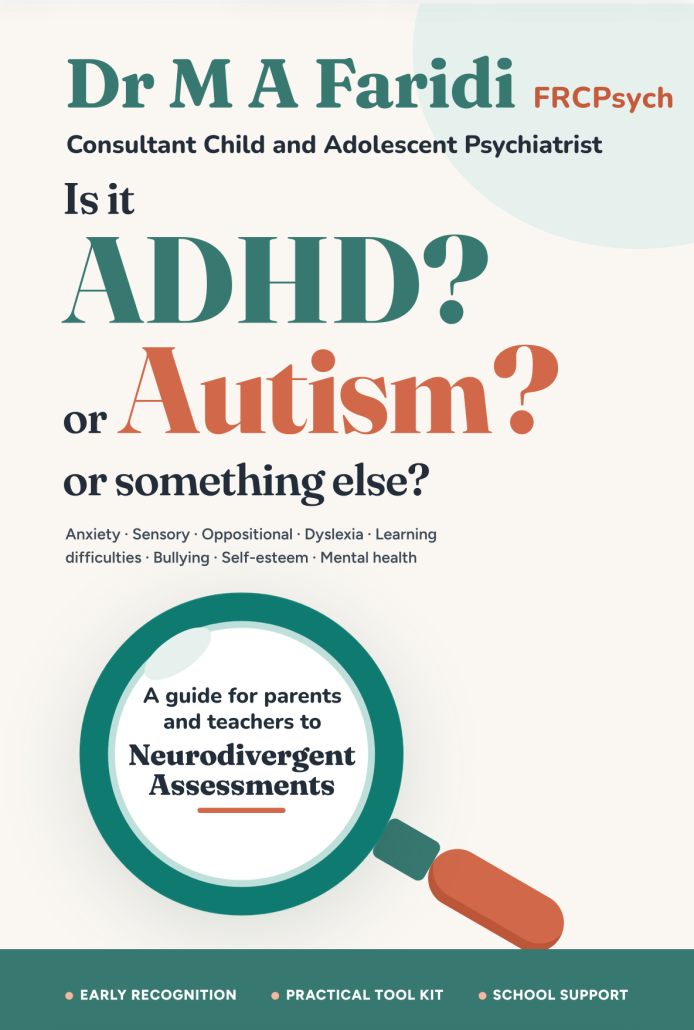
Dr M A Faridi FRCPsych, a consultant child and adolescent psychiatrist, has written a book that takes that question seriously. Is It ADHD, Autism, or Something Else? is a guide for parents and teachers to neurodivergent assessments. This post explains why he wrote it, what is inside and why it is worth reading.
Why Dr Faridi wrote the book
In the foreword, Dr Faridi explains that he has been struck for years by how often neurodiversity is present but not recognised. ADHD and autism can shape a child’s learning, emotions, relationships and daily life long before anyone has the words to explain what is happening. His starting point is simple. People only see clearly what they have learned to notice.
The book sets out to change what families and schools notice. Its stated purpose is to bring clarity and earlier recognition. It also aims to encourage timely support for children, young people and families who might otherwise struggle unseen.
He also makes a point that is easy to lose in conversations about diagnosis. Neurodiversity is not only about difficulties. It is also about strengths and differences that deserve to be understood with care and respect.
Who the book is for
The book is written for parents and teachers. The dedication goes wider, to everyone who lives with, cares for or works with children and young people who have neurodiversity, especially ADHD or autism. The hope is that people will recognise the signs earlier, understand the hidden struggles and offer support with more compassion.
It is written in plain language for people who are worried and tired, not for specialists. That is exactly why it works.
What is inside: four parts, one steady path
The book moves from first worry to practical next steps.
Part 1
Understanding the pattern
Early signs, ADHD, autism, the overlap between them, patterns and other possible explanations.
Part 2
Assessment, diagnosis and decisions
Watchful waiting, ADHD and autism assessment, diagnosis and what happens when there is no diagnosis.
Part 3
Support that helps now
Daily life, sensory overload, demand pressure, masking and anxiety.
Part 4
Parent toolkit
Observation forms, school meetings, questions for professionals, one-page plans and review.
Why it is a good book
It does not rush to a label
The stated aim is not to label a child quickly. It is to understand them more kindly and respond more wisely. That tone runs through the whole guide. It is a relief for parents who feel pushed towards a verdict before they understand what they are seeing.
It takes the overlap seriously
ADHD and autism can look similar. Anxiety, trauma, sleep problems and other difficulties can look similar too. A whole part of the book is given to patterns and other explanations. That is what the title promises. It is also what makes the book honest.
Support does not have to wait for a diagnosis
One of the book’s steadiest messages is that parents can start helping now. Making routines clearer and reducing overwhelm do not need a label first. Part 3 turns that idea into practical help with sensory overload, demand pressure, masking and anxiety.
It gives parents something to do
The toolkit is where the book earns its place on the shelf. One example is a simple pattern note built on five questions:
- What happened?
- What came before it?
- What helped a little?
- What made it harder?
- What might my child need?
The advice that goes with it is gentle. One week of calm noticing is often more useful than constant analysing.
It is honest about its limits
The book is clear that it cannot diagnose a child. What it can do is help parents decide what support or assessment may be useful. That honesty is what you would expect from a clinician who does this work every week.
It is kind to the reader
The guide tells parents they do not need all the answers today. It suggests reading slowly, marking what sounds familiar and skipping what does not fit. For anyone in the middle of a worrying stretch, that permission matters.
About the author
Dr Faridi is a consultant child and adolescent psychiatrist working across NHS and private practice. He is a Fellow of the Royal College of Psychiatrists, is on the GMC Specialist Register and has more than nine years of experience as an NHS ADHD consultant. The book draws on extensive experience supporting children, young people and families living with complex ADHD, autism and mental health difficulties. You can read more about Dr Faridi on this site.
A book clinicians can recommend to families
If you work in ADHD or autism assessment, you will know how many families arrive confused, anxious or waiting a long time. A calm, practical guide written by a psychiatrist can help them make sense of what they are seeing before and between appointments. The pattern notes and observation forms may also help parents bring clearer examples to an assessment, which supports the developmental history clinicians need.
The book does not replace assessment. It prepares families for it. The Clinician Hub explains where different professionals fit within UK assessment frameworks.
Assess ADHD yourself? Train with Dr Faridi.
The ADHD Diagnostic Assessor Training is a CPD-certified, one-day live online course led by Dr Faridi. The next course is on Saturday 28 November 2026.
Frequently asked questions
Who is Is It ADHD, Autism, or Something Else? for?
It is a guide for parents and teachers who are trying to understand a child’s difficulties and decide what to do next. Anyone who lives with, cares for or works with neurodivergent children may find it useful.
Can the book tell me whether my child has ADHD or autism?
No. A book cannot diagnose a child. It helps you notice patterns, ask better questions and decide whether to seek assessment or support. Diagnosis needs a qualified professional.
Do I need a diagnosis before I can help my child?
No. The book encourages parents to start with clearer routines and less overwhelm now. You do not need certainty before you help.
Is the book only about ADHD?
No. It covers ADHD, autism, the overlap between them and other explanations for what you are seeing. The title asks the question honestly.

Leave a Reply
Want to join the discussion?Feel free to contribute!